

Overheating at night is one of the most common causes of disrupted sleep. While waking up hot at night may be a one-time issue for some people, for others, it can become a chronic barrier to recovery.
Like most sleep issues, overheating at night can be caused by many things. Sometimes it’s your environment or external factors, such as heatwaves during summer, which are increasingly present in other seasons too due to climate change. Sometimes it’s your routine. And sometimes, it’s your own body failing to cool itself down the way it’s supposed to.
In this article, we’ll break down why people overheat at night, how it affects their sleep quality and recovery, and what you can do to stop your body from overheating at night.
Why Body Temperature Matters for Sleep
Your body temperature remains fairly consistent throughout the day, dropping by about 1.8°F at night. That cooling process is part of your internal rhythm, helping you enter the deeper stages of sleep, which are necessary for physical and mental recovery.
If your body can’t cool down properly, your sleep gets lighter and more fragmented. You may wake up more often, and even if you technically sleep through the night, you don’t feel well rested.
Over time, that leads to:
-
Poor muscle recovery
-
Higher resting heart rate
-
Brain fog, irritability, or low energy
-
An ongoing feeling of tension, even after “enough” sleep
Older adults and people with pre-existing conditions are particularly at risk of significant health decline due to repeated heat stress at night, as well as lack of sleep that comes with it.

Reasons You Get So Hot When You Sleep
There are several reasons you might feel hot at night. Let’s go through the ones that matter most, starting with the most obvious one.
1. Your Bedroom Environment
Your bedroom environment, which includes room temperature, can hurt your sleep quality. Most research suggests that the ideal room temperature for sleep is between 60°F and 67°F (15 °C-19°C).
Beyond the number on your thermostat, airflow and humidity matter just as much. Stagnant air, poor ventilation, or high humidity trap warmth around your body, making it harder for heat to dissipate. Even if the room feels cool when you first lie down, conditions can change during the night.
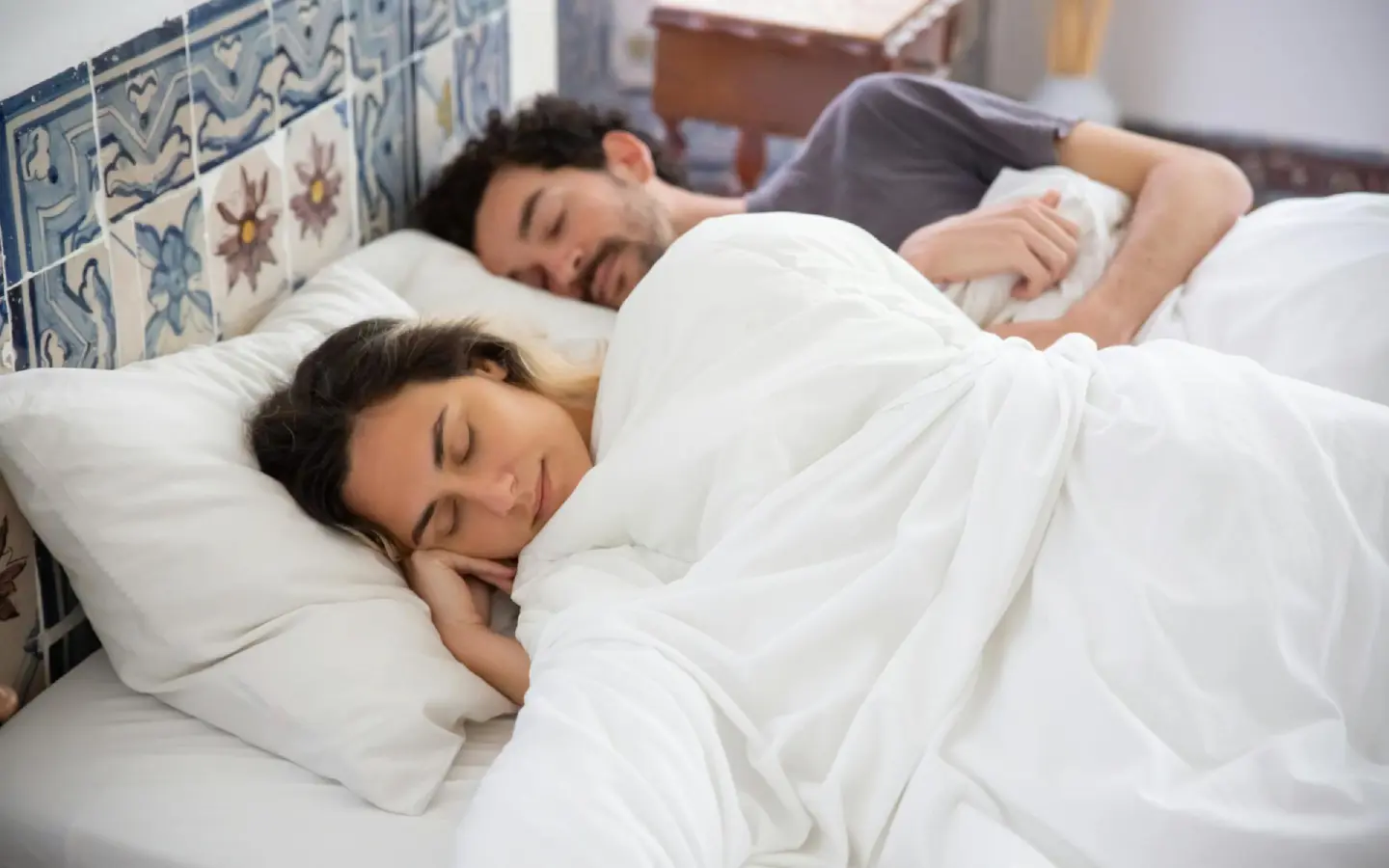
For example, if your room has poor insulation or the window is shut tight, it can slowly trap warm air as you breathe and move in bed. If you sleep with someone else, their body heat can also raise the temperature in your sleep zone, especially if your mattress or bedding doesn’t allow airflow between you.
2. Your Mattress, Sheets, or Pajamas
Most people don’t realize how much heat gets trapped under the body as they sleep. Dense mattresses, such as memory foam, are known for this – they mold to your body while also absorbing and retaining your body heat. That can be great for comfort but terrible for thermoregulation.
The same goes for heavy comforters, synthetic fabrics, and layered sleepwear that doesn’t breathe. If your pajamas or sheets are made from polyester, fleece, or microfiber blends, they’re more likely to trap heat against your skin. Even high-thread-count cotton, if woven too tightly, can restrict airflow.
If you often wake up hot around your back, shoulders, or neck, your bedding setup might be the problem.
3. Your Pre-Bed Activities
Late workouts, large or heavy meals, alcohol, caffeine, and even just mental overstimulation all affect your core temperature. Exercise raises your metabolism, digestion keeps your system active, and alcohol changes how your blood vessels regulate heat.
Mental stress plays a role, too, so if your mind is racing, your body is unlikely to settle into the calm, cooled-down state it needs to fall and stay asleep.
Remember, you don’t need a perfect routine, but if you’re doing things that keep you alert, busy, or activated right up until bedtime, you’re making it harder for your system to cool down naturally.
4. Hormonal Changes
Waking up hot at night is sometimes caused by hormonal changes. Estrogen and progesterone, in particular, influence how the body regulates heat. This is why so many women going through perimenopause or menopause experience hot flashes and night sweats.
Hormone-related overheating isn’t just limited to these two hormones. Thyroid imbalances, pregnancy, and certain phases of the menstrual cycle can all raise nighttime temperature and make it harder to sleep.
5. Medications, Illness, or Stress
Certain medications can interfere with the body's ability to regulate temperature during sleep. Antidepressants (especially SSRIs and SNRIs), hormone therapy, steroids, and some medications for blood pressure or diabetes are known to cause overheating and sweating at night.
The same goes for stress, which triggers cortisol spikes and disrupts the body’s ability to cool down.
6. Sleep Disorders
Some sleep disorders put extra strain on the body during the night, which can lead to higher internal temperature and more disrupted rest.
The most common example is obstructive sleep apnea. When breathing repeatedly stops and restarts during sleep, the body has to work harder to get enough oxygen. This raises heart rate and creates physical effort, which leads to overheating at night.
If you snore, wake up gasping, or feel unrested most mornings, it’s worth speaking with a sleep specialist. Tracking your sleep with a wearable can also help uncover signs of disrupted sleep that may not be obvious.

How To Stop Overheating at Night
To stop overheating at night, start by fixing your sleep environment first. Try lowering your thermostat a few degrees before bed, and make sure your room is well-ventilated. Fresh air helps remove pollutants and regulate humidity. You can use a fan or a small air purifier to keep the air moving while you sleep and reduce the stuffy feeling that often builds up overnight.
Next, look at what your body is in contact with when overheating occurs.
If your mattress sleeps hot, you may need a breathable mattress topper or a different surface entirely. There are smart options, like temperature-controlled sleep pods with dual-zone settings, which can be helpful if you’re sharing a bed with someone who prefers a different temperature than you.
Use sheets and pajamas made from cotton, linen, or bamboo, and avoid anything synthetic or moisture-trapping. Keep layers light and adjust as necessary.
If you find it hard to cool down before sleeping, try taking a cool shower 30–60 minutes before bed, and avoid alcohol or heavy meals in the evening.
When your evenings are busy or if you work out late, give yourself a proper wind-down period. That can mean dimming the lights, turning off screens, and doing something calming like stretching, reading, or listening to music.
And if overheating continues despite all these changes, consider tracking your sleep and recording your patterns. Are certain times of the month worse? Did things start after a medication change? These details can help you and your doctor figure out what your body is trying to communicate.
Solving Overheating Is Just One Piece of the Puzzle
Sleep quality depends on more than just physical comfort. Your circadian rhythm, nervous system, hormone levels, and daily habits all work together to determine how deeply and consistently you rest.
If even one part of that system is off – whether it’s your stress level, your schedule, or your body’s ability to relax – your sleep will suffer, even in a perfectly cool room.
This is why it's worth thinking about the bigger picture: how you transition into sleep, how stable your nights are, and whether your system has what it needs to recover properly.
How Kimba Supports Your Sleep Quality

Kimba is not made to cool your body, and it's not a solution for overheating. But it can help your system stay calm and balanced, especially on nights when stress or internal tension makes sleep feel more fragile.
Kimba works using its own built-in sensors, and can also connect to your wearable, whether that's Oura, WHOOP, or Apple Watch.
It tracks your sleep signals in real time and looks for signs that your system is struggling, like restlessness, movement, or changes in heart rate variability. When those signals appear, Kimba releases a pulse of scent designed to support calm and help the nervous system stay steady.
This kind of support can make your nights more stable and your recovery more complete. It doesn't replace good habits, but it works alongside them to help your body stay in a deeper, more consistent state of rest, especially when you're dealing with stress or irregular sleep patterns.


