Naps can feel like a secret power-up in the middle of the day. When you are tired, stressed or not sleeping well at night, taking a nap can help you refocus and make the rest of the day more manageable. At the same time, the wrong kind of nap can leave you groggy, wide awake at bedtime, and annoyed that you tried to rest at all.
If you already struggle with your sleep at night, you are probably trying to understand whether napping at daytime is helping or hindering your recovery. The answer is not a simple yes or no.
Studies show the effectiveness of your naps depends on how long you sleep, when you do it inside the 24-hour cycle, and how much rest you get at night in the first place. A nap can be a smart recovery tool or a quiet way to keep your sleep problems going. It all comes down to how you use it.
Why You Feel Sleepy
The answer to what makes you sleepy lies in understanding sleep pressure.
From the moment you wake up in the morning, you exert energy to think, move, and function. As this happens, a chemical called adenosine builds up in the brain. The longer you stay awake, the more of this chemical accumulates, and the sleepier you get.
As you sleep at night, your brain clears most of that accumulated adenosine, and by the time you wake up, sleep pressure is low again. A nap does the same thing, just on a smaller scale. It clears part of that adenosine build-up, which is why napping can be exactly what your body requires on some days.
Another factor as to why you get sleepy is your internal clock. Most people feel less alert in the early afternoon. If you nap in that window, you’re working with your body. If you nap late in the day, closer to bedtime, you’re most likely going to feel it in your sleep quality that night.
Benefits of Napping When Done Right
Studies show that short, strategic naps can sharpen your focus, ease irritability, and support learning and memory. Naps are especially helpful if you:
- had a short or restless night
- are going through a heavy training block
- work shifts or have changing hours
- are in a period of life where it’s hard to get a full night’s sleep
Research shows that naps may help decrease blood pressure and improve heart health, especially when taken in the early afternoon. Also, compared with another coffee or an energy drink, a nap does not force your system to push harder than it already is.

When Taking a Nap Can Work Against You
The same nap that helps you one day can make your night worse the next.
Naps are more likely to work against you if:
- you wake up feeling heavy, foggy and slow
- you find it harder to fall asleep at your usual bedtime
- you rely on naps every single day just to feel barely functional
That heavy, slow feeling after a long nap is called sleep inertia. It usually happens when you wake from deep sleep, which is why napping should be.
If this is something you struggle with, read our article on sleep inertia for solutions.
How To Nap For Most Health Benefits
You get the most out of naps when they are short, early, and intentional. The goal is not to sleep as much as possible. The goal is to feel and function better for the rest of the day without making your night worse.
Best Time of Day to Nap?
For most people, the best time for napping is early afternoon. Aim to nap between 1 pm and 3 pm, and avoid napping within three to four hours of your usual bedtime. If you currently have trouble falling asleep at night, and you are abusing naps during the day, pause naps for a week or two and see what happens.
If you work shifts or have an irregular schedule, place your nap in the middle of your wake period instead of relying on the clock. Look for the point in your day when you lose focus and feel the sleepiest. That is usually the best moment for a short nap.
How Long Should You Nap For?
For most healthy adults, the most effective nap length is around 10 to 25 minutes. That is usually enough to reduce sleepiness, ease tension, and give your brain a short reset without pulling you into deep sleep. Waking from deep sleep is what often makes you feel groggy and more tired instead of rested.
If falling asleep in a short window is hard for you, read our guide on falling asleep fast.
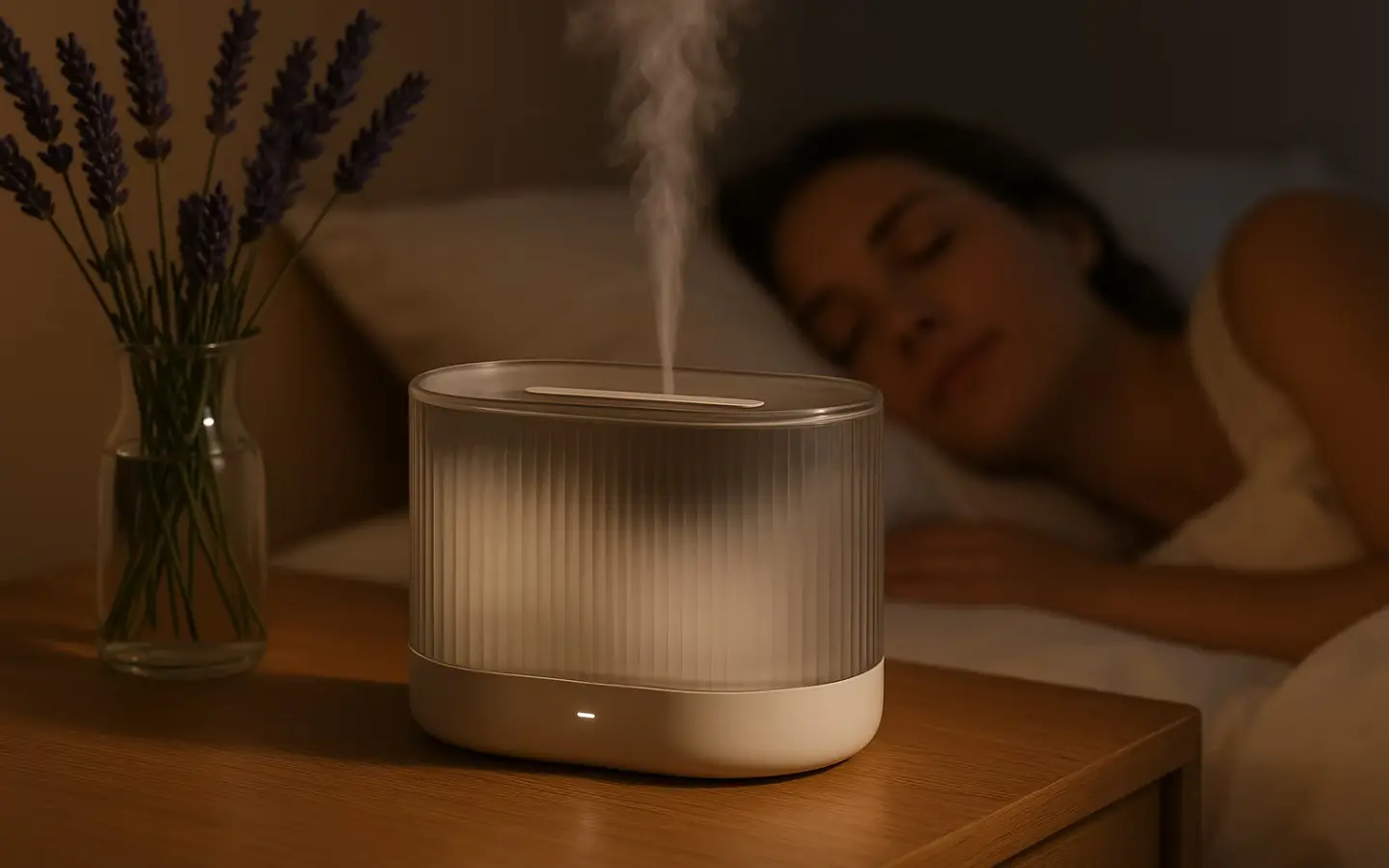
Where Kimba Fits Into Your Nap Routine
Kimba is designed to support your nervous system by using scent in a targeted way. During a nap, that means your environment can do some of the work of helping you settle and wake, instead of you trying to control everything with willpower.
Kimba connects to your wearable and reads signals such as heart rate and patterns linked to stress. Based on those signals, it releases scent blends that are chosen to support calm rather than stimulation.
During naps, this can help you in a few specific ways:
-
Settling faster: when your signals show you are still in high alert, Kimba can respond with scent profiles your brain already associates with winding down. That makes it easier to cross from “thinking about resting” into actual rest.
-
Keeping short naps light: for short naps, you want mostly light sleep. If your patterns begin to look more like deeper sleep than you planned, Kimba can subtly shift stimulation so waking up feels easier and less disorienting.
- Smoother wake-up: as your nervous system moves back toward wakefulness, the scent environment can help make that transition feel less abrupt.
At night, the same logic applies, just over a longer timeframe.
Kimba reacts when your system shows signs of strain – like frequent movement, changes in HRV, or fragmented sleep – and responds with scent therapy designed to keep your nervous system steadier. Naps and nights stop being separate worlds and start feeding into the same recovery pattern.
Ready to experience how scent, science, and real-time support can change the way you sleep?


