March 7, 2026
Up at 3 AM Again? Here’s Why It Happens

For many people, waking up in the middle of the night seems to happen around the same time, often close to 3 AM. You might fall asleep easily at bedtime, only to find yourself wide awake hours later, staring at the ceiling and wondering what went wrong.
This kind of early-morning awakening is common, and it doesn’t always mean something is seriously wrong with your sleep.
Why 3 AM? What’s Happening in Your Body at That Hour
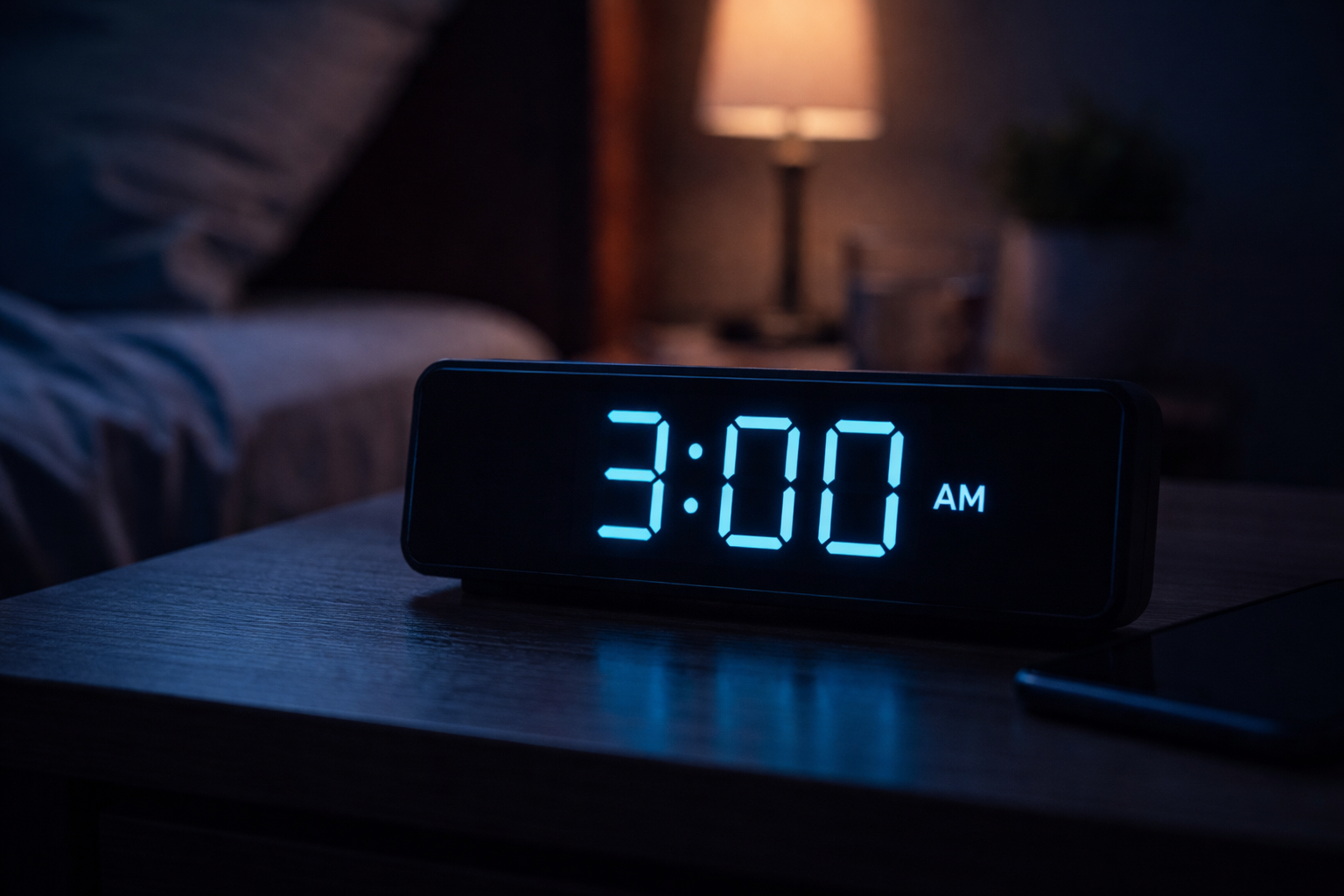
The reason why you seem to always wake up around 3 AM reflects what your brain and body are naturally doing in the second half of the night.
Here are a few things that are usually going on during that part of the night:
Your Sleep Is Naturally Lighter
Earlier in the night, deep sleep takes up a larger portion of each sleep cycle. This is the stage where your brain is least responsive to the outside world and where awakenings are less likely.
As the night progresses, deep sleep gradually declines and REM sleep becomes longer and more frequent.
By the final third of the night, REM periods can last significantly longer than they did earlier, and transitions between stages occur more often. Because REM is a more active stage of sleep, with higher brain activity and greater emotional processing, it is also a more fragile stage.
You are simply easier to wake up during REM, especially when sleep is shifting between stages.
[CTA_INSERT]
Your Body Temperature Is at Its Lowest Point
Core body temperature follows a 24-hour rhythm. It drops during the evening and reaches its lowest point in the early morning, usually one to two hours before your natural wake time.
Around this minimum, your internal clock begins shifting direction. Temperature slowly starts rising again, signaling that morning physiology is approaching.
If you wake during this turning point, your body may already be leaning toward alertness rather than deep rest.
Cortisol Naturally Rises Toward Morning
Cortisol is often called the “stress hormone,” but it is also a wake-promoting hormone. Its levels are lower in the early night and gradually increase toward morning.
This rise is part of a healthy daily rhythm since it prepares you to wake up and function. But if you become conscious while this system is ramping up, the internal chemistry of your body is no longer optimized for falling back asleep quickly.
Common Triggers and Risk Factors
Most recurring 3 AM awakenings reflect factors that increase micro-arousals or push the brain toward lighter sleep, with the biggest ones being stress, substances, medications, and untreated sleep disorders.
Alcohol
Alcohol can reduce REM sleep and alter sleep architecture. Even low doses can negatively affect REM, while higher doses may shorten sleep onset latency but worsen subsequent REM disruption.
Caffeine
Caffeine blocks adenosine, the chemical that builds sleep pressure throughout the day. When adenosine signaling is reduced, the brain feels less sleepy, even if you have been awake for many hours.
Because caffeine has a long half-life, part of it can still be active in your system late at night, especially if consumed in the afternoon or evening.
Stress, Anxiety, and Depression
Chronic stress and mental health conditions such as generalized anxiety disorder, panic disorder, depression, and post-traumatic stress disorder are strongly associated with disrupted sleep continuity.
These conditions are associated with higher nighttime arousal, with increased sympathetic activity and less stable stress-hormone rhythms across the night.
As a result, the brain remains more sensitive to internal sensations and subtle environmental cues, making sleep less consolidated and more easily disrupted, especially in the lighter second half of the night.
Sleep Disorders (Especially OSA and RLS)
With obstructive sleep apnea, breathing can partially collapse during sleep. Each breathing disruption triggers a brief arousal so the body can reopen the airway.
Many people do not remember these awakenings, but they can add up. By early morning, sleep may already be fragmented enough that a final arousal turns into full wakefulness.
Restless legs syndrome works differently but can have a similar effect on continuity. The uncomfortable urge to move the legs tends to intensify in the evening and at night.
Even if it does not fully wake you at first, it can make returning to sleep harder after a natural stage transition. Over time, repeated small disruptions can lower the threshold for becoming fully awake in the early hours.
Medications
Many prescription and OTC drugs can interfere with sleep, especially antidepressants, asthma medicines, blood pressure medicines, and stimulant-containing OTC products.
Stopping 3 AM Awakenings Before They Happen
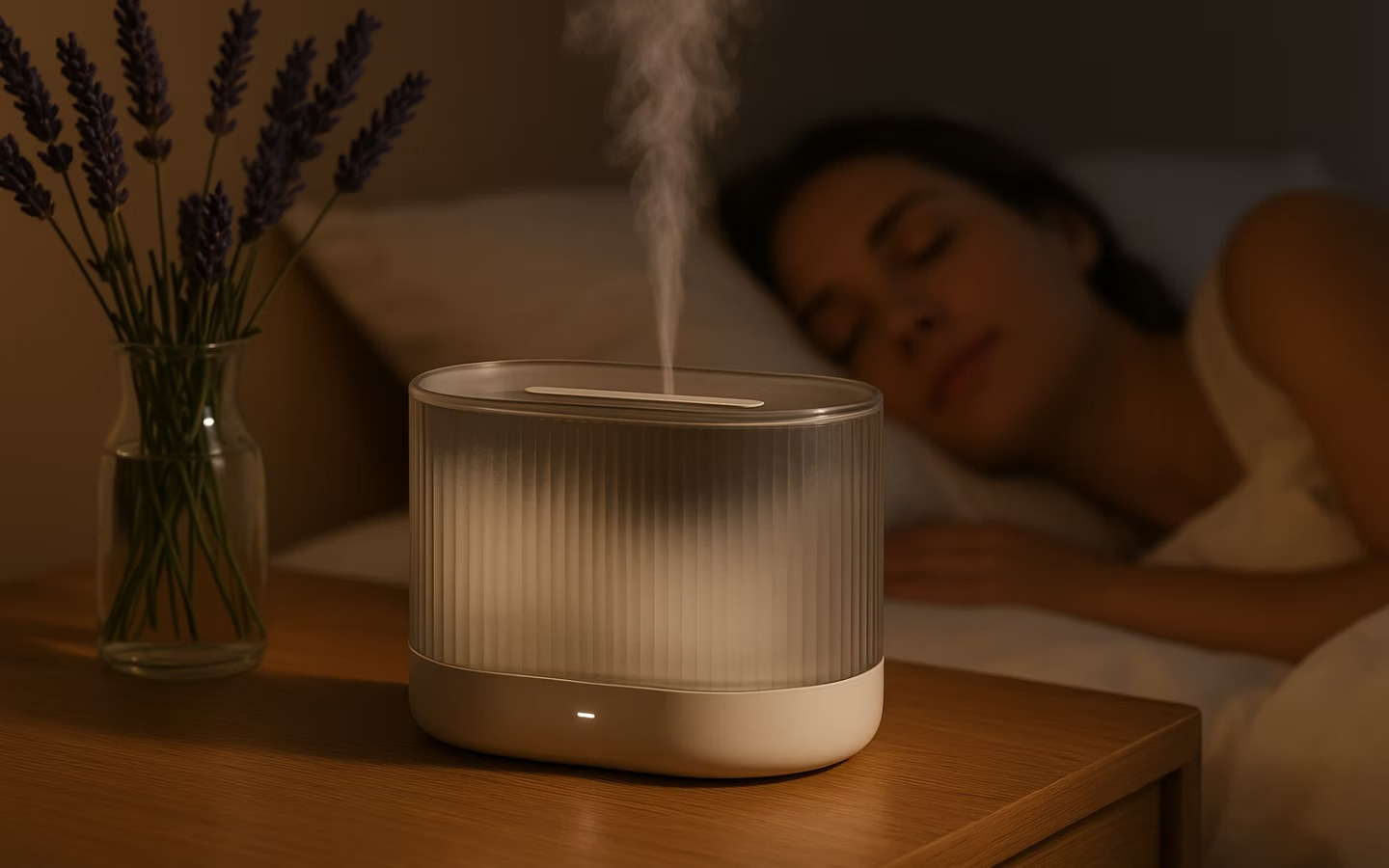
In most 3 AM awakenings, the problem begins before you are fully awake. Sleep becomes lighter, REM is longer and more unstable, and autonomic activity can become more variable as the body shifts toward wakefulness.
Kimba is designed to detect that shift in real time.
By integrating data from wearable devices, it monitors patterns such as movement, heart rate changes, and sleep-stage transitions. When those signals indicate that sleep is becoming lighter or arousal is increasing, Kimba releases a short, precisely timed scent pulse.
Because olfactory pathways connect directly to limbic regions involved in autonomic regulation, scent can influence arousal without requiring conscious awareness.
In essence, Kimba intervenes during the transition itself, before a micro-arousal becomes a full awakening.
If you want to see how real-time scent timing can support your sleep continuity, you can join the Kimba waitlist and be among the first to try it.

Continue reading

How Blue Light Affects Your Sleep

What Is the 10:3:2:1 Rule Before Bed?