

We spend roughly a third of our lives asleep, which means your sleeping position is something your body holds for thousands of hours over a lifetime.
How you sleep affects how your spine is loaded, how your joints take pressure, how freely you breathe, and how easily your nervous system stays calm instead of pulling you into light, broken sleep.
This guide breaks down why sleeping position matters, how each position affects the body, and how to adjust your setup so your sleep works with you instead of against you.
Why sleeping position matters
Airway and breathing
When you lie down, gravity changes the shape and stability of the upper airway. The tongue and soft tissues of the throat are no longer supported by upright posture, which makes airflow more sensitive to body position.
Small shifts in how these structures rest can change how easily air moves in and out during sleep, affecting snoring and breathing stability.
Spinal alignment over long hours
A position that slightly bends or twists the neck, shoulders, or hips may not feel uncomfortable at first, but holding that posture for six to nine hours can turn minor misalignment into strain.
How well a position allows the spine to stay neutral determines whether sleep supports recovery or contributes to pain.
Pressure points and circulation
When weight is concentrated on areas like the shoulder, hip, or arm, tissue compression can build over time.
Discomfort, tingling, or numbness usually comes from pressure on nerves or joints rather than poor circulation, and the way weight is distributed depends heavily on sleeping position and surface support.
Digestion and reflux
Lying down changes how gravity influences digestion. Without upright positioning, stomach contents move more freely, and the likelihood of reflux depends on how the body is oriented during the night.
Sleeping position can either reduce or increase the chances that acid travels upward and interrupts sleep, especially when digestion is already stressed.
Back sleeping (supine)
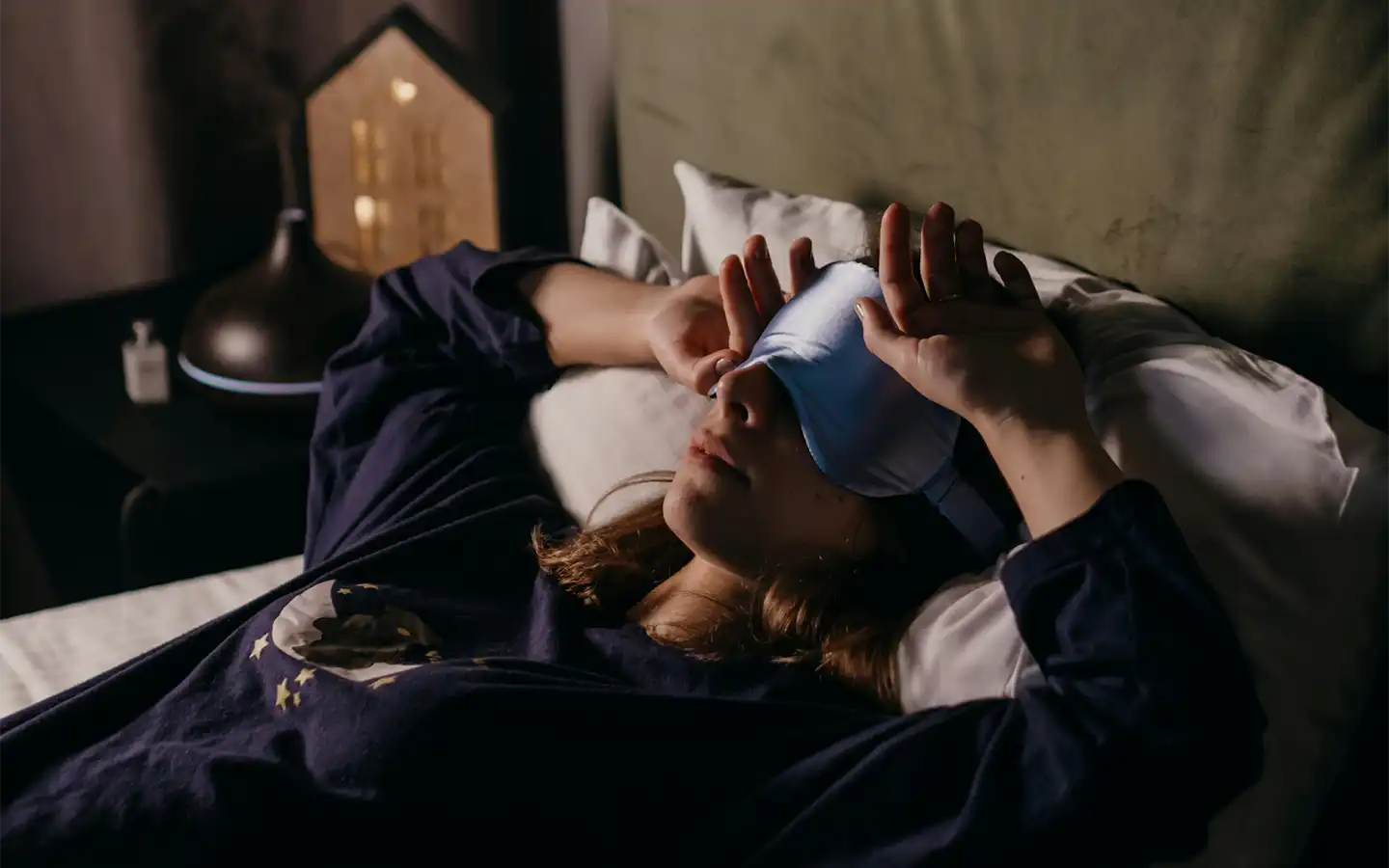
What it tends to help
- Even weight distribution across the body
- Neck and back comfort when the spine stays neutral
- Less pressure on shoulders and hips
What it can worsen
- Snoring and breathing disturbances in some people
- Feeling congested or mouth breathing
How to improve back sleeping
- Place a pillow under your knees to reduce lower back strain
- Use a pillow that supports the neck curve without pushing the head forward
- If breathing issues appear, consider switching to a side position or slight upper body elevation
Side sleeping
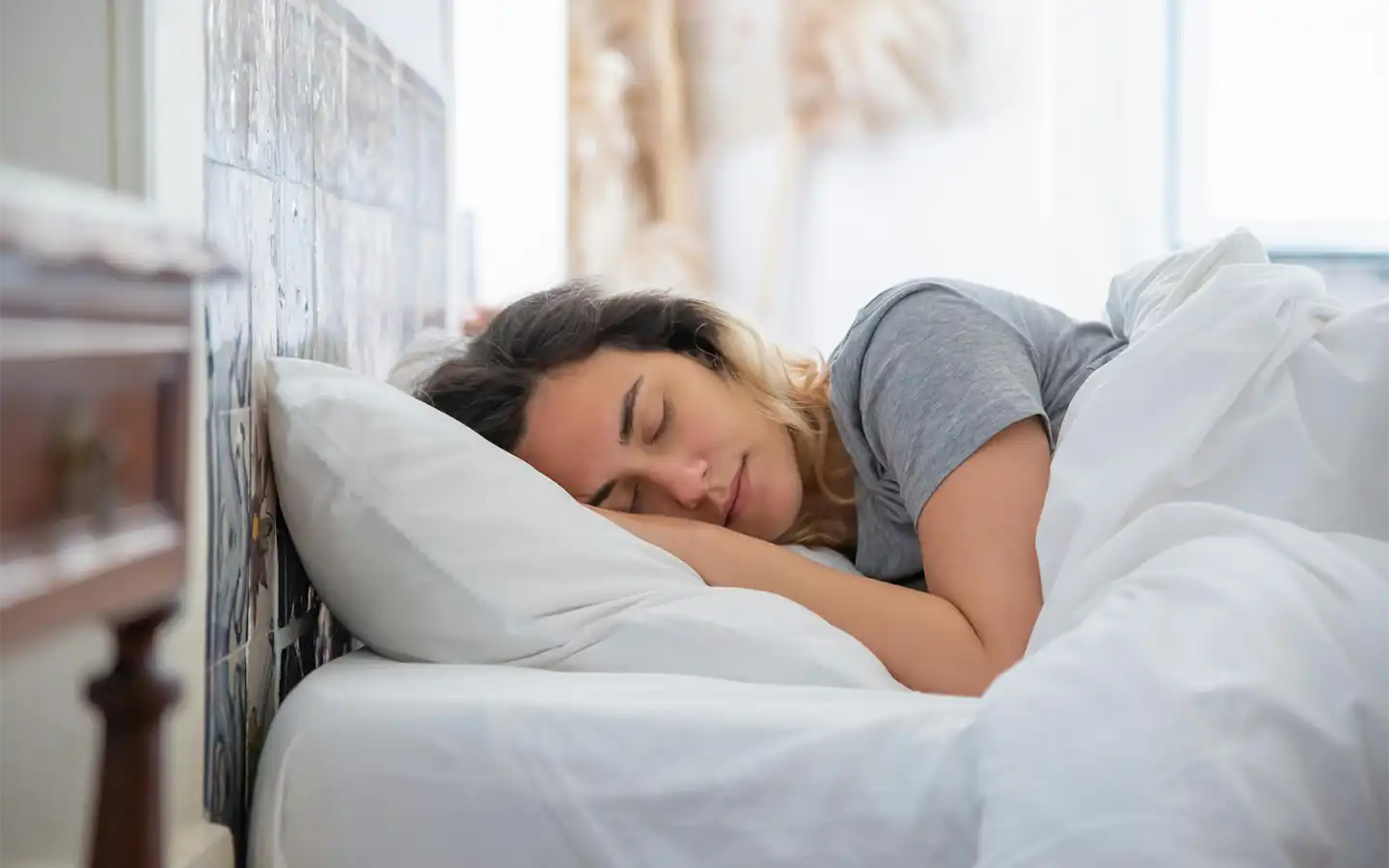
What it tends to help
- Breathing and reduced snoring for many people
- Easier spinal alignment compared to stomach sleeping
- Comfort during pregnancy
What it can worsen
- Shoulder pain on the lower side
- Hip pressure
- Arm numbness if the upper body collapses forward
How to improve side sleeping
- Use a pillow that keeps the neck level with the spine
- Place a pillow between the knees to stabilize the hips
- Hug a pillow to prevent the top shoulder from rolling forward
Sleeping on left side vs right side
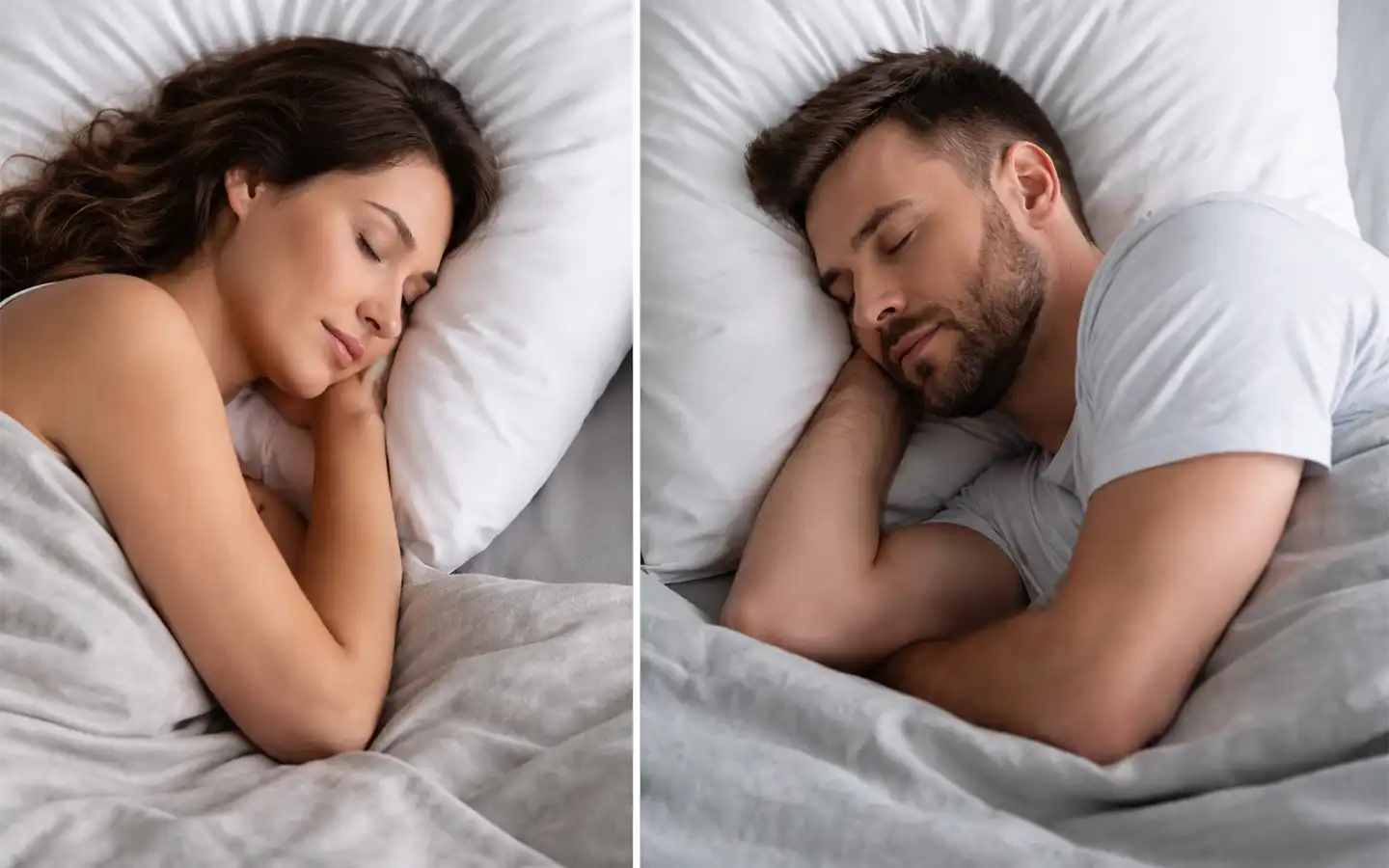
Sleeping on your left side versus your right side can make a noticeable difference, but only in specific situations.
Left side sleeping tends to be more comfortable for people who experience nighttime reflux, because the orientation of the stomach and esophagus makes it harder for acid to move upward during the night.
Right side sleeping, on the other hand, is not inherently worse. It often comes down to comfort and history. If one shoulder or hip is more sensitive due to past injury or strain, sleeping on the opposite side may feel easier and lead to fewer pressure-related awakenings.
When it comes to breathing, the difference between left and right matters far less than staying off your back. Both side positions generally support more stable airflow than back sleeping, which is why the priority for snoring or breathing disturbances is choosing a side position you can maintain, not forcing a specific side.
Fetal position

What it tends to help
- Can feel relieving for lower back discomfort
- Often comfortable during pregnancy
What it can worsen
- Neck stiffness if the chin drops too far
- Hip tightness if the knees are pulled high without support
How to improve it
- Keep the curl relaxed rather than tightly compressed
- Support knees and arms with pillows
- Avoid pulling the chin toward the chest
Stomach sleeping (prone)

Stomach sleeping puts the body in a position it cannot keep neutral for long periods. To breathe, the head has to stay turned to one side, which means the neck remains rotated for hours without resetting.
That prolonged rotation is a common source of morning neck stiffness and uneven muscle tension.
At the same time, lying face down tends to tip the pelvis forward and increase the arch in the lower back. Instead of being supported, the lumbar spine stays compressed through the night, which is why this position often aggravates low back tightness, especially after sleep.
Additionally, many stomach sleepers also load one shoulder by reaching an arm overhead or tucking it under the pillow, which makes everything worse because it forces the shoulder into an internally rotated, elevated position for hours, increasing joint stress and the likelihood of nerve compression rather than allowing the upper body to relax and reset during sleep.
Best sleeping position for lower back pain

Lower back pain at night is often less about the position itself and more about how stable the position remains over time. Many people fall asleep comfortably but slowly drift into a twisted or arched posture that stresses the lumbar spine for hours.
The most protective positions for the lower back are the ones that limit rotation and excessive arching.
Back sleeping tends to reduce asymmetrical loading, while side sleeping can work well when the pelvis is prevented from rolling forward. What matters most is keeping the lower back from being pulled into the same stressed shape all night.
If you wake with stiffness rather than sharp pain, that usually points to prolonged low-grade strain rather than acute injury.
Best sleeping position for IT band pain
IT band pain during sleep is usually driven by sustained compression at the outer hip, and positions that repeatedly load the same outer hip for hours tend to aggravate IT band–related discomfort.
Sleeping directly on the painful side often makes symptoms worse because the outer hip and thigh are compressed all night, while sleeping on the opposite side can reduce pressure if the top leg is supported with a pillow to prevent the hip from dropping inward.
Back sleeping removes pressure from both outer hips entirely and is often the most neutral option, especially when a pillow under the knees helps keep the pelvis stable.
Positions that allow one leg to cross forward or pull upward, such as stomach sleeping with a bent knee, can increase tension along the outer thigh and are more likely to worsen symptoms by morning.
Best sleeping position for sciatica
Sciatica symptoms are highly sensitive to spinal position because nerve irritation responds poorly to sustained compression or tension. Nighttime pain often appears when the lower spine spends hours in a flexed or twisted position without relief.
Sleeping positions that keep the pelvis level and avoid pulling one knee far higher than the other tend to be better tolerated. When one side of the body drops or rotates more than the other, nerve symptoms are more likely to flare.
If sciatica pain wakes you during the night or appears first thing in the morning, that often indicates the nerve is being stressed during sleep, not just during daytime movement.
Best sleeping position to avoid stroke
Sleep position is not a direct cause of stroke, but it can influence several stroke-related risk factors, particularly breathing stability, nighttime oxygen levels, and blood pressure regulation.
Positions that repeatedly disrupt breathing or promote oxygen drops can place added strain on the cardiovascular system over time.
For most people, side sleeping is the most supportive position in this context, since side positions tend to keep the airway more stable and reduce snoring and breathing interruptions compared to back sleeping.
How Kimba supports sleep quality

Even with a good sleeping position, sleep can remain fragmented if the nervous system stays overactive.
Kimba is an adaptive scent sleep system that works on the part of sleep that posture alone can't reach. Using its own built-in sensors, or synced with a wearable for added precision, Kimba tracks how your body is doing throughout the night and releases a brief scent cue the moment it senses your system tipping toward alertness.
Scent is uniquely suited for this because it's one of the only senses that stays active while you sleep, capable of reaching the brain without pulling you out of rest.
Over repeated nights, this becomes a kind of quiet reinforcement: the nervous system starts to associate that cue with settling back down rather than waking up.
Sleeping position takes the physical strain off your body. Kimba takes the edge off an overactive nervous system. Together, they turn time in bed into real recovery.


