April 10, 2026
How Blue Light Affects Your Sleep

Most of us know on some level that screens before bed aren't great, and for more than one reason.
Whether you are watching TV or scrolling through your phone, the experience keeps you in a state of low-level alertness. The content we consume tends to stick in our minds as well, keeping us mentally engaged at a time when our brains should be slowing down.
But there's also a more biological reason, one that has nothing to do with what's on the screen and everything to do with the light coming off it.
What Is Blue Light?
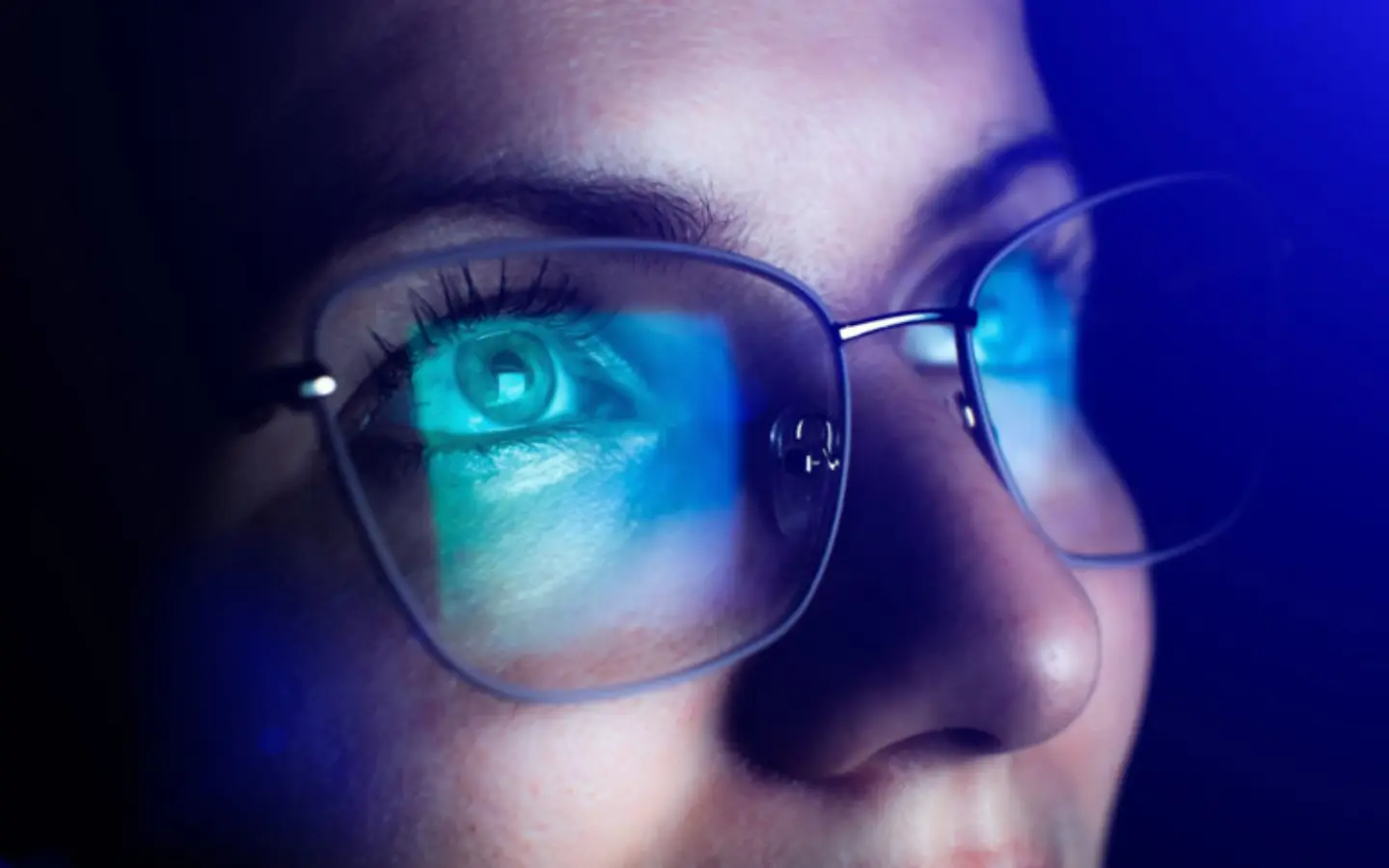
Blue light is a type of visible light that sits on the short-wavelength end of the spectrum, falling between roughly 400 and 490 nanometers. It is part of the visible light spectrum, which ranges from about 380 nanometers at the violet end to around 700 nanometers at the red end.
The shorter a light wave is, the more energy it carries, and blue light sits close enough to that high-energy end that it triggers biological responses in the eye that warmer, longer-wavelength light is too weak to produce.
LED technology in particular produces a strong concentration of short-wavelength light, which is why it’s so widely used in devices today.
Which Devices Emit Blue Light?
- Smartphones and tablets
- Laptops and desktop monitors
- LED televisions
- LED and fluorescent light bulbs
- Backlit e-readers
Why Our Bodies Need Blue Light
Blue light is not inherently artificial or harmful – the sun is by far the largest source of it, and during the day, your body genuinely needs it.
That need is rooted in how your body keeps time, running on a roughly 24-hour internal cycle known as the circadian rhythm, and blue light is one of the primary signals that keeps it synchronized with the outside world.
When morning light enters your eyes, specialized photoreceptors detect the short wavelengths and send a signal to the suprachiasmatic nucleus, a small region in the hypothalamus that acts as the brain's master clock.
From there, cortisol begins to rise and body temperature starts climbing, shifting your body into an active state. At the same time, melatonin production is suppressed, which is precisely what allows you to feel awake and alert rather than groggy.
So blue light is essentially your body's biological alarm clock, one it has been relying on long before actual alarm clocks existed.
[CTA_INSERT]
Why Is Blue Light Bad for You at Night?
Your body expects the light around you to gradually warm and dim as the evening progresses, and for most of human history, it did exactly that.
The widespread adoption of LED screens over the past two decades has made that natural wind-down much harder to come by.
Smartphones and tablets typically emit blue light at intensities ranging from 1,000 to 1,500 lux, while laptops sit in a similar range depending on screen brightness. LED televisions tend to emit somewhat less, closer to 100 to 400 lux at a typical viewing distance, but they more than make up for it in screen size.
To put that in context, the ipRGCs (the photoreceptors responsible for detecting blue light and regulating melatonin), begin responding at exposures as low as 10 lux, and reach a near-maximum suppression response at around 100 to 200 lux.
Once those photoreceptors are activated, they send a signal to the suprachiasmatic nucleus telling it that daylight is still present and that melatonin release should be held back, so the body then stays in a physiologically alert state.
What Blue Light Does to Your Sleep
- Suppresses melatonin production, delaying the onset of sleep
- Disrupts your circadian rhythm by mimicking daytime light signals
- Pushes back your natural sleep timing, reducing total sleep duration
- Decreases the amount of deep, restorative sleep you get
How Kimba Uses Technology Differently
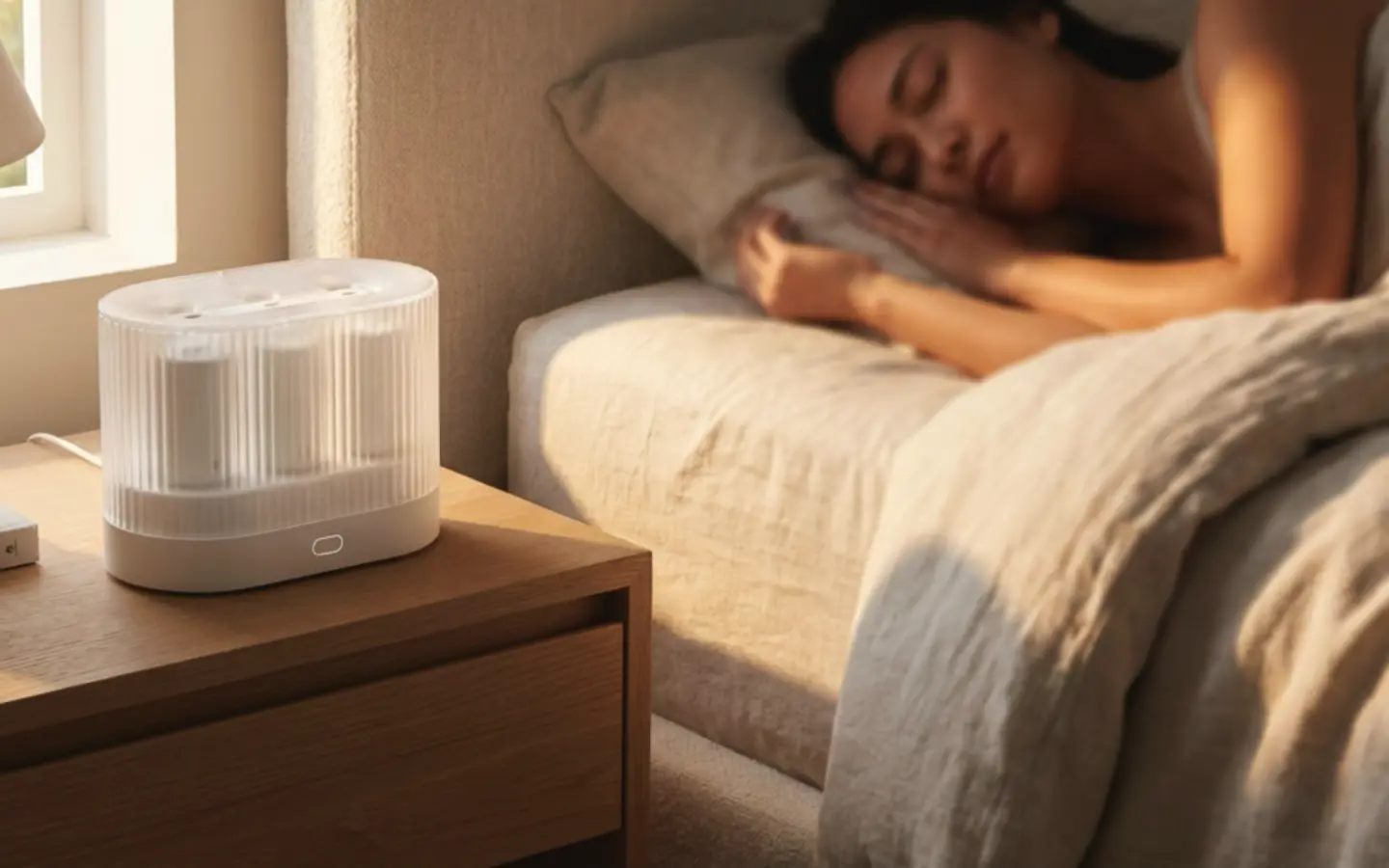
It would be easy to walk away from all of this thinking that technology and good sleep are simply incompatible, but that's not quite right.
When used in a way that works with your biology rather than against it, technology can actually support the kind of deep, restorative sleep that blue light disrupts.
Kimba is the first smart sleep diffuser that connects to the wearables you already own and uses your real-time biometric data to support your sleep as it's happening.
Its built-in AI monitors your heart rate, breathing patterns, and sleep stage shifts throughout the night, and when it detects that your body is drifting out of deeper sleep, it responds with a precisely timed pulse of natural scent.
Why scent? Because scent reaches the brain through a direct pathway tied to emotion, memory, and the body's automatic functions, which means it can nudge your nervous system back toward deeper sleep without ever waking you up.
Sounds interesting? Get early access to Kimba.

Continue reading

What Is the 10:3:2:1 Rule Before Bed?