April 2, 2026
What Is the 10:3:2:1 Rule Before Bed?

Who knew a handful of numbers could be the thing standing between you and a genuinely good night's sleep?
It sounds like a fitness formula or some kind of obscure productivity hack, but the 10:3:2:1 rule is actually one of the better sleep tools out there. The idea behind it is that it takes everything we know about winding down properly and wraps it into a single rule you can actually remember.
Instead of sorting through a long list of sleep tips, the 10:3:2:1 rule gives you a clear timeline to follow in the hours leading up to bed.
Think of it as the fundamentals of good sleep hygiene, organized in a way that finally makes them stick.
What Is the 10:3:2:1 Rule?
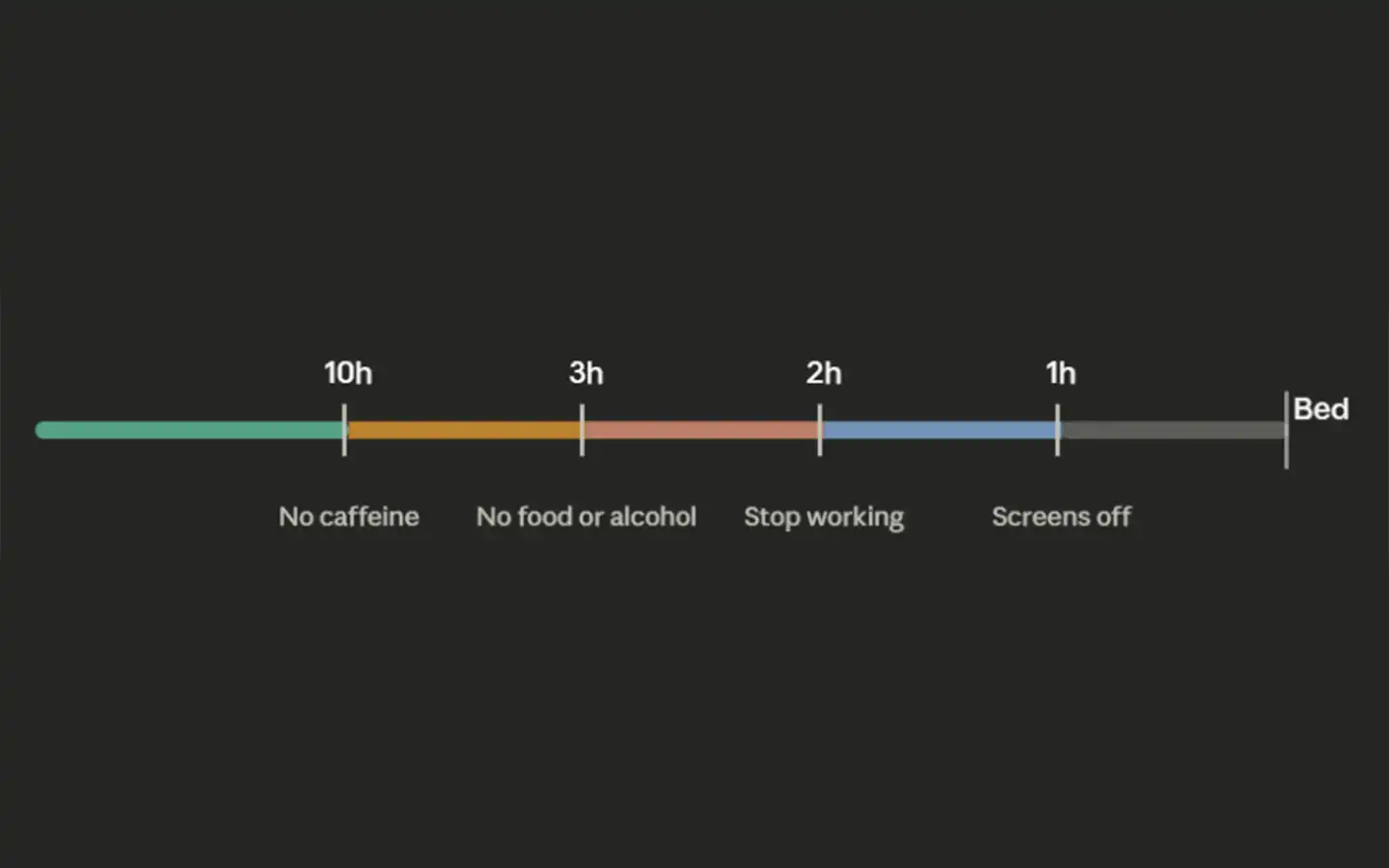
The 10:3:2:1 rule gives you four specific cutoff points before your bedtime, each tied to a habit that can interfere with sleep.
Ten hours before bed, you stop caffeine. Three hours before bed, no more food or alcohol. Two hours before bed, you stop working. One hour before bed, screens go off. That's it.
The numbers are based on how long it actually takes the body to clear or calm down from that particular stimulus. Together, they create a natural ramp-down that starts well before you actually try to fall asleep.
10 Hours Out: No More Caffeine
Most people assume that if they stop drinking coffee after 2pm, they’re in the clear. The problem is that caffeine has a half-life of five to six hours, so an afternoon cup can still leave a meaningful amount in your system by the time you go to bed.
Research published in the Journal of Clinical Sleep Medicine found that consuming caffeine even six hours before bedtime reduced total sleep time by more than an hour.
The ten-hour window sounds aggressive, but it accounts for individual variation, because some people metabolize caffeine slowly due to genetic differences in the CYP1A2 enzyme, meaning caffeine lingers in their system significantly longer.
If you've ever had an evening coffee and slept fine, you're likely a fast metabolizer, and most people aren't quite so lucky.
3 Hours Before Bed: No Food or Alcohol
There's a common misconception that a glass of wine helps you sleep. It does help you fall asleep faster, but it doesn't help you sleep well.
Alcohol suppresses REM sleep, which is the stage most tied to emotional processing and memory consolidation. What often happens is you fall asleep quickly, sleep heavily in the first few hours, then wake up in the middle of the night as the alcohol wears off and your body rebounds into lighter, fragmented sleep.
Food doesn't sedate you the way alcohol does, but eating close to bedtime still works against you – it raises your core body temperature and keeps your digestive system active at a time when your body is trying to do the opposite.
For sleep to begin, your core temperature actually needs to drop slightly, and digestion gets in the way of that. Eat an hour before bed and your body is essentially running two competing processes at once.
[CTA_INSERT]
2 Hours: Stepping Away From Work
If you're one of the people who can't stop thinking about work the moment you try to relax, the two-hour rule is probably the one that will make the biggest difference for you.
The issue is that your brain doesn't really distinguish between actually doing work and just thinking about it.
Running through your task list, replaying a meeting, mentally drafting an email you haven't written yet is still work to your nervous system. Your body stays tense, and that state of low-level alertness is just not compatible with sleep.
You can be lying in a dark, quiet room and still be completely wound up because of what's happening in your head.
The two-hour buffer is really about giving your brain enough time to gradually shift out of that mode before you actually try to sleep.
1 Hour Before Bed: Screens Off
This last hour before bed is where you start stepping away from anything that keeps your mind active, and at this point, it’s your phone.
The blue light argument gets a lot of attention, and it's valid, since exposure to short-wavelength blue light suppresses melatonin production. But the issue with scrolling before bed runs deeper than just the light itself.
Social media, news, and even casual browsing keep you in a somewhat alert state in a way that's hard to wind down from. There's always something to respond to, something that triggers a reaction, something that pulls your attention forward.
The phone will be there tomorrow, nothing you need to see right now is worth trading off your sleep. Try your best to leave it out of reach and let your mind actually slow down before bed.
Does The 10:3:2:1 Rule Have to Be Exact?
The 10:3:2:1 rule works best as a framework, not a rigid schedule. Life doesn't always allow for perfect adherence, and stressing about whether you had your last coffee at exactly ten hours out is probably more disruptive than the coffee itself.
The value of the rule is in it giving you a starting point to build from and a way to identify which habit might be the one actually undermining your sleep.
If you're struggling with sleep quality but haven't tried any of these consistently, starting with just one or two can make a real difference before you attempt all four at once.
The 10:3:2:1 Rule Helps, But It Doesn’t Cover Everything
Following the 10:3:2:1 rule can genuinely improve your sleep. But for some people, doing everything right on paper still doesn't translate into deep, restorative sleep.
You follow the routine, you're in bed at a reasonable hour, and you still wake up feeling like you didn't fully recover.
We built a device that can help you close that gap by responding to what your body is actually doing while you sleep.
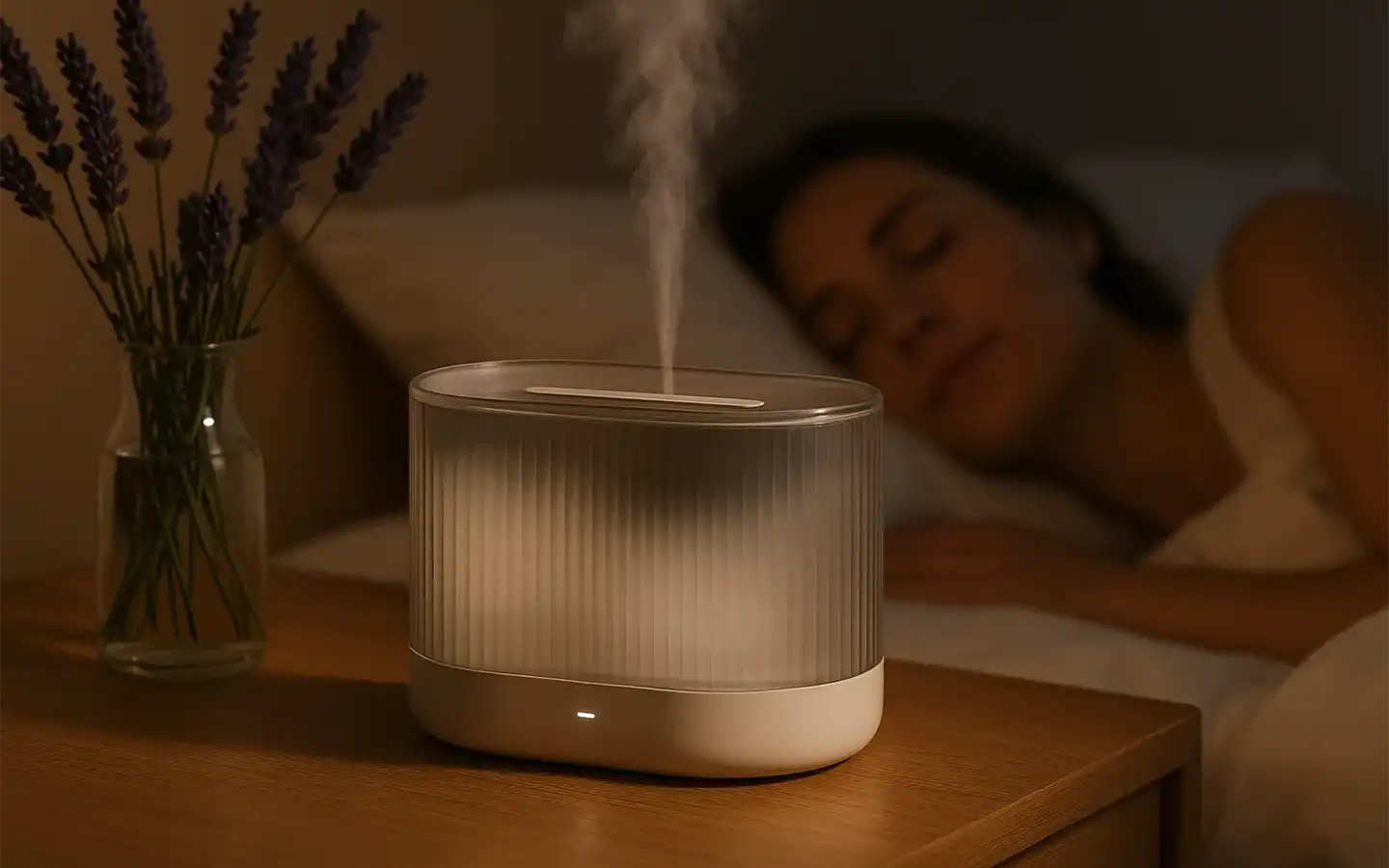
Kimba is the first smart diffuser designed specifically for sleep and recovery. It connects to wearables you may already own, like Oura, Apple Watch, WHOOP, or Garmin, and monitors your body's signals throughout the night.
When your heart rate stays elevated, your breathing becomes irregular, or your body shifts out of deeper sleep stages earlier than expected, Kimba responds with a precisely timed pulse of scent.
Scent works because it reaches your brain almost instantly, through pathways directly connected to emotion, memory, and your body’s automatic functions. That means it can influence how your body feels without needing your conscious attention.
The 10:3:2:1 rule sets you up for sleep. Kimba helps your body actually get there.

Continue reading
The Science Behind Smell and Sleep Regulation